Foil Flex vs. DryerFlex: Which Dryer Vent Hose Is Right for Your Home?



The short hose connecting your dryer to the wall vent might seem like a minor detail. But this transition hose plays a critical role in your dryer’s safety and performance.
Not all dryer vent hoses are created equal. Understanding the differences between foil flex and DryerFlex hoses helps you make the right choice for your home.
Understanding Dryer Vent Transition Hoses
The transition hose is the flexible section between your dryer’s exhaust port and the rigid ductwork in your wall or floor.
This hose needs to be flexible because:
- Dryers need to be pulled out for cleaning and service
- Some vibration and movement occurs during operation
- Connection points aren’t always perfectly aligned
However, flexibility comes with tradeoffs. Flexible hoses can crush, kink, or tear more easily than rigid metal ductwork.
That’s why choosing the right hose material and construction matters so much.
What Is Foil Flex Hose?
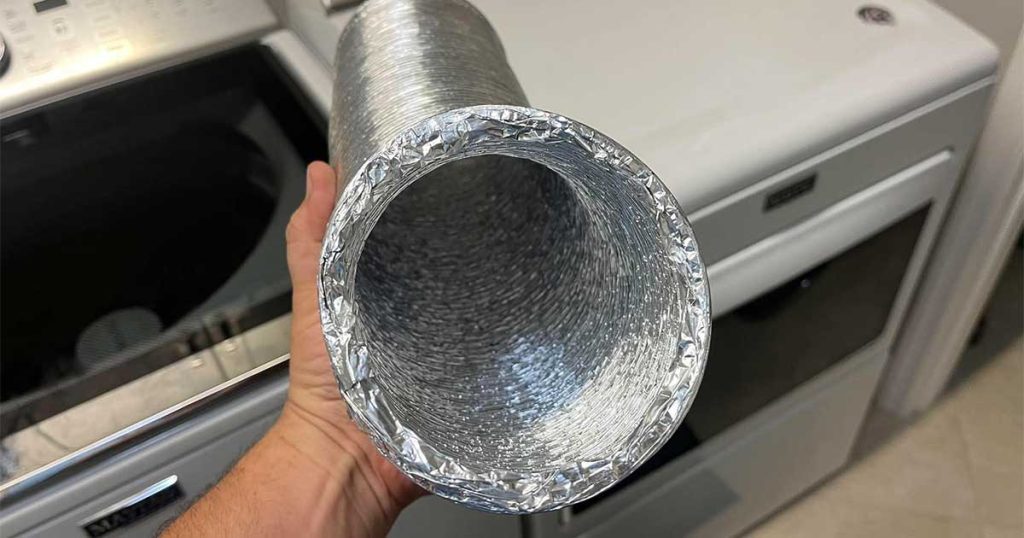
Foil flex hose (also called aluminum foil hose) is the most common and economical transition hose option.
Construction:
- Made from thin aluminum foil
- Reinforced with wire coil for shape
- Lightweight and very flexible
- Available in 4-inch diameter for standard dryers
Appearance: Foil flex hoses look like shiny, accordion-style flexible ducting. They compress and extend easily.
Cost: Foil flex hoses typically cost $10-$20 to purchase. Our installed price is $35, including clamps and professional installation.
What Is DryerFlex Hose?
DryerFlex is a premium transition hose designed specifically for dryer applications.
Construction:
- Made from heavy-duty aluminum
- Thicker walls than foil flex
- Crush-resistant design
- Semi-rigid construction maintains shape
- Available in 4-inch diameter
Appearance: DryerFlex hoses have a more substantial, professional appearance. They’re less shiny than foil flex and noticeably heavier.
Cost: DryerFlex hoses cost $30-$40 to purchase. Our installed price is $60, including clamps and professional installation.
Comparing Foil Flex and DryerFlex
Let’s break down the key differences between these two hose types.
Durability and Lifespan
Foil Flex: Thin aluminum foil construction tears relatively easily. Sharp objects, rough handling, or pets can puncture the material. The wire reinforcement helps but doesn’t prevent all damage.
Typical lifespan: 3-5 years with careful use
DryerFlex: Heavy-duty aluminum construction resists tears and punctures much better. The thicker material withstands normal wear and accidental contact.
Typical lifespan: 8-10+ years
Winner: DryerFlex for long-term durability
Crush Resistance
Foil Flex: Very susceptible to crushing. When dryers are pushed too close to walls, foil flex hoses compress easily. Crushed hoses restrict airflow severely.
We frequently find foil flex hoses completely flattened during inspections.
DryerFlex: Designed to resist crushing. The semi-rigid construction maintains its shape even when squeezed. While you can still crush it with enough force, it requires significantly more pressure than foil flex.
Winner: DryerFlex significantly better
Airflow Efficiency
Foil Flex: When new and properly installed, foil flex provides adequate airflow. However, the accordion-style interior creates more turbulence than smooth ductwork.
The interior ridges also trap more lint over time.
DryerFlex: Smoother interior surface reduces turbulence and lint accumulation. Better maintains efficient airflow over its lifespan.
Winner: DryerFlex for sustained efficiency
Fire Safety
Foil Flex: Made from aluminum, which is non-combustible. This makes foil flex far safer than plastic or vinyl hoses.
However, thin construction can develop holes or tears that allow lint to escape behind the dryer, creating fire hazards.
DryerFlex: Also non-combustible aluminum. Thicker construction better contains lint within the hose and resists damage that could allow lint escape.
Winner: DryerFlex slightly safer due to durability
Code Compliance
Foil Flex: Meets basic building code requirements for dryer vent transition hoses in most jurisdictions. Must be metal (not plastic or vinyl) and properly secured.
DryerFlex: Exceeds minimum code requirements. Specifically designed for dryer venting applications.
Winner: Both compliant, DryerFlex exceeds minimums
Installation and Flexibility
Foil Flex: Extremely flexible and easy to work with. Stretches and compresses to fit various distances. Bends easily around obstacles.
This flexibility is both an advantage (easier installation) and disadvantage (more likely to kink or crush).
DryerFlex: Less flexible than foil flex but still workable. Requires more deliberate bending but maintains bends better without kinking.
Winner: Foil flex for ease of installation, but DryerFlex’s semi-rigidity is actually better long-term
Price and Value
Foil Flex: Lower upfront cost makes it tempting for budget-conscious homeowners.
At $35 installed, it’s the economical choice if you need immediate replacement and have a tight budget.
DryerFlex: Higher upfront cost ($60 installed) but significantly better value over time.
Lasts 2-3 times longer than foil flex, meaning lower lifetime cost. Better performance and safety add further value.
Winner: DryerFlex for overall value despite higher initial cost
When Foil Flex Makes Sense
Despite DryerFlex’s advantages, foil flex is appropriate in certain situations:
Temporary installations: If you’re renting and don’t plan to stay long, foil flex is adequate.
Budget constraints: If $35 fits your budget but $60 doesn’t, foil flex is acceptable.
Easy access installations: If your dryer is in an open area where the hose won’t be crushed or damaged, foil flex can work fine.
Frequent dryer relocation: If you move your dryer regularly for cleaning (though we don’t typically recommend this), foil flex’s extra flexibility helps.
When DryerFlex Is the Better Choice
For most homeowners, DryerFlex is worth the extra investment:
Standard installations: The typical scenario where the dryer sits close to the wall benefits from crush resistance.
Long-term home ownership: If you plan to stay in your home, DryerFlex’s longer lifespan provides better value.
Homes with pets or children: Increased durability protects against accidental damage.
Existing damage history: If you’ve had problems with crushed or torn hoses before, upgrade to DryerFlex.
Maximum safety priority: When you want the best protection for your home and family.
Villages homes with roof vents: Homes with longer vent runs through the roof benefit from the improved airflow of DryerFlex.
What About Plastic and Vinyl Hoses?
You might see white or clear plastic flexible hoses at hardware stores. Do not use these for dryer vents.
Why plastic hoses are dangerous:
Plastic and vinyl are combustible. When exposed to dryer heat, they can melt, catch fire, or release toxic fumes.
Building codes prohibit plastic and vinyl dryer vent hoses in most jurisdictions for good reason. They’re serious fire hazards.
If you currently have a plastic or vinyl hose, replace it immediately with either foil flex or DryerFlex. This is a safety issue that can’t wait.
We frequently find plastic hoses during dryer vent inspections in older homes. Replacing them is always our top priority recommendation.
Installation Best Practices
Whichever hose type you choose, proper installation is crucial.
Use proper clamps: Secure both ends with metal clamps or foil tape. Never use plastic zip ties or duct tape, which can fail.
Minimize length: Keep the transition hose as short as possible while allowing the dryer to be pulled out for service. Four feet is typically adequate.
Avoid kinks: Don’t bend the hose sharply or create kinks that restrict airflow.
Don’t overextend: Fully compressed accordion-style hoses restrict airflow. Leave some space between accordion ridges.
Leave service access: Position the dryer so you can disconnect the hose for periodic cleaning and maintenance.
Check clearance: Ensure the hose isn’t crushed when the dryer is in its normal position.
Professional installation ensures these best practices are followed. Our technicians carry both foil flex and DryerFlex on every truck, so we can install the right hose for your situation during the same visit.
Signs Your Transition Hose Needs Replacement
Replace your transition hose if you notice:
Visible damage: Tears, holes, or significant crushing
Age: Foil flex older than 5 years, DryerFlex older than 10 years
Rust or corrosion: Indicates moisture problems that compromise the material
Disconnection: If the hose keeps coming loose from connections
Lint accumulation around connections: Suggests gaps or holes allowing lint escape
Reduced dryer performance: While often a vent problem, damaged transition hoses can contribute
Don’t wait for complete failure. Preventive replacement is safer and more convenient than dealing with a failed hose.
The Role of Transition Hoses in Overall Vent System
The transition hose is just one part of your complete dryer vent system, but it’s an important one.
Even with the best transition hose, you still need:
Regular professional cleaning: Annual dryer vent cleaning removes lint buildup throughout the system.
Proper rigid ductwork: The main vent line should be smooth, rigid metal ductwork, not flexible material.
Appropriate exterior termination: A proper roof collar or wall cap prevents pests and weather intrusion.
Correct installation: The entire system must be installed according to building codes and manufacturer specifications.
Think of the transition hose as the connection point between your dryer and the permanent vent system. Both the connection and the system matter.
Making Your Decision
Here’s a simple decision framework:
Choose DryerFlex if:
- You want the best long-term value
- Your dryer sits close to the wall
- You prioritize maximum safety and durability
- You plan to stay in your home long-term
- You’ve had problems with crushed hoses before
Choose foil flex if:
- Budget is your primary concern
- You’re in a temporary living situation
- Your dryer has plenty of clearance from walls
- You need immediate replacement and $25 matters significantly
For most Villages homeowners, we recommend DryerFlex. The extra $25 provides noticeably better performance and durability. It’s a small price difference that delivers meaningful benefits.
Frequently Asked Questions
How often should I replace my dryer vent hose?
Foil flex every 3-5 years, DryerFlex every 8-10 years, or sooner if you notice damage. Regular inspections during professional cleaning help identify when replacement is needed.
Can I install a dryer vent hose myself?
Basic installation is possible for handy homeowners, but professional installation ensures proper technique and code compliance. We can replace your hose during a regular cleaning visit.
What’s the difference between transition hose and vent ductwork?
The transition hose is the short flexible section right behind the dryer. Vent ductwork is the permanent rigid pipe running through your walls, attic, or crawlspace to the exterior.
Do I need to replace my hose when I buy a new dryer?
Not necessarily, but it’s a good time to inspect and consider replacement if the hose is more than a few years old.
Can I use a longer transition hose?
Codes typically limit transition hoses to 8 feet maximum. Shorter is better for efficiency and safety. If you need more length, your vent system may need reconfiguration or repair.
Will a better hose fix my slow drying problem?
If your current hose is crushed or damaged, replacing it helps. However, most drying problems stem from lint buildup in the main vent line, which requires professional cleaning.
Get the Right Hose for Your Home
Choosing between foil flex and DryerFlex doesn’t have to be complicated. For most homeowners, DryerFlex is the smart choice that provides better value, safety, and performance.
But regardless of which hose you choose, proper installation and regular maintenance are what really matter for your dryer’s safety and efficiency.
Ready to upgrade your dryer vent hose or need professional advice on which option is right for your home? Contact Lint Dragon today. We serve homeowners throughout The Villages and Central Florida with expert dryer vent hose replacement services.
We carry both foil flex and DryerFlex on every service truck and can replace your hose during the same visit as your professional cleaning. Get the right hose installed the right way, and enjoy peace of mind knowing your dryer vent system is safe and efficient.