
What Happens If You Never Clean Your Dryer Vent?



Most homeowners know they’re supposed to clean the dryer vent. Most also keep pushing it off. It’s one of those tasks that’s easy to defer because the dryer still runs, nothing looks obviously wrong, and there’s always something more pressing to deal with.
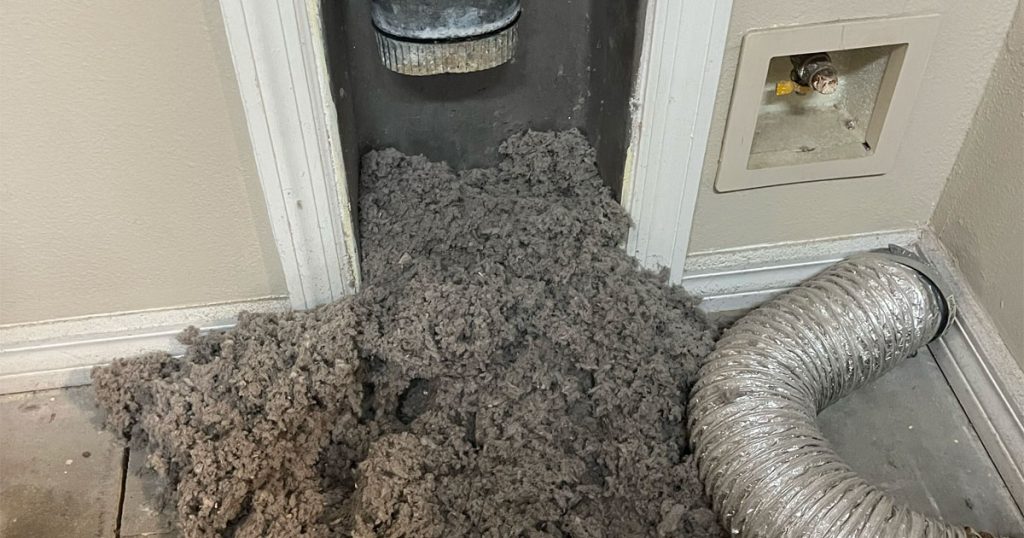
But lint buildup doesn’t announce itself. It accumulates quietly, and the consequences get more serious the longer it goes unaddressed. This post walks through what actually happens to your vent, your dryer, and your home over time, so you can make an informed decision about whether to act now or wait.
The Short Answer: It Gets Worse Over Time
Dryer vent neglect follows a fairly predictable pattern. The early stages are mostly an efficiency problem. The later stages are a safety problem. Here’s a general timeline of what we see:
| Time Without Cleaning | What’s Happening | Risk Level |
|---|---|---|
| 0-1 year | Lint accumulates gradually. Most systems handle this without noticeable performance change. | Low |
| 1-2 years | Drying times start to creep up. Energy use increases. Lint may be visible at the exterior vent. | Low to Moderate |
| 2-5 years | Significant lint compaction. Airflow is genuinely restricted. Dryer runs longer and works harder. Appliance wear accelerates. | Moderate |
| 5+ years | Heavy blockage. Real fire risk from heat buildup. Vents may be disconnected or damaged. Dryer may be triggering thermal shutoff. | High |
These timeframes vary depending on how often you use the dryer, what type of laundry you’re drying, and how your vent is configured. Households with heavy dryer use, pets, or roof-vented systems tend to move through this progression faster.
Year One to Two: The Efficiency Starts to Slip
In the first year or two without cleaning, most homeowners don’t notice much. Lint is accumulating in the vent line, but airflow is still adequate enough to dry clothes in a normal cycle.
Toward the end of this window, small changes start showing up. Drying times get slightly longer. The laundry room might feel a little warmer than usual during a cycle. These are easy to attribute to something else, which is part of why they get ignored.
Energy use is going up during this period even when performance seems acceptable. The dryer is working harder to push air through a gradually narrowing path.
Years Two to Five: Airflow Becomes a Real Problem
This is the range where things shift from inconvenient to genuinely problematic. Lint has had time to compact, and the restriction in the vent is now significant enough to affect every cycle.
What you’ll notice
- Loads that used to dry in one cycle now need two
- Clothes come out warmer than normal but still damp
- The dryer exterior or the laundry room gets noticeably hot
- You may see lint accumulating around the exterior vent
- The dryer runs a full cycle and shuts off without finishing
That last point is worth paying attention to. Many dryers have a thermal shutoff that activates when the machine overheats. It’s a safety feature, but if it’s triggering regularly, it’s a sign the vent can’t keep up. We cover the most common symptoms in detail in our post on 5 warning signs your dryer vent is clogged.
What’s happening to the dryer itself
Dryers are built to operate within a certain temperature range. When the vent is restricted, heat backs up into the machine. Components like the heating element, motor, and drum seals wear out faster under these conditions. A dryer that might have lasted 15 years with proper ventilation can fail years earlier when it’s been running hot for an extended period.
Vent neglect doesn’t just cost you in cleaning fees. It shortens the life of an appliance that costs several hundred to over a thousand dollars to replace.
Beyond Five Years: Fire Risk Is Real
This is the part that’s important to say directly without overstating it. Dryer fires are a documented risk, and lint buildup in the vent system is the leading cause. The U.S. Fire Administration has consistently identified failure to clean the dryer vent as the primary factor in residential dryer fires.
What creates the fire risk isn’t just the lint itself. It’s the combination of highly flammable lint and the heat that can no longer escape properly. In a severely restricted vent, temperatures can rise to the point where ignition becomes possible.
This doesn’t mean every neglected dryer vent is going to cause a fire. But the risk increases meaningfully with time. Our post on how often you should clean your dryer vent to prevent fires goes deeper on the fire prevention side of this topic.
Other things that can go wrong in severely neglected systems
- Vent connections can loosen or disconnect entirely, venting exhaust into the wall cavity or attic
- Termination caps on roof vents can become blocked by debris or damaged by weather
- Flexible transition hoses can collapse or deteriorate, especially older accordion-style plastic hoses
- Moisture from restricted exhaust can cause mold or water damage inside walls
| What we typically find on vents that have never been cleaned When we service a vent that hasn’t been cleaned in many years, we often find lint packed densely through a significant portion of the vent run, not just near the dryer. Roof vent caps are frequently clogged or partially blocked. Transition hoses are often the wrong type or in poor condition. In some cases, we find disconnections that have been venting exhaust into the attic for an unknown period of time.None of this is meant to alarm you. Most of these situations are fixable in a single visit. The point is that these problems don’t announce themselves from the outside. |
The Good News: Most Neglected Vents Can Be Restored
If you’ve been putting off dryer vent cleaning for a few years, you’re not dealing with a permanent problem. In the vast majority of cases, a professional cleaning restores proper airflow and performance in a single visit.
The question of whether cleaning is worth it is something we address directly in our post on whether dryer vent cleaning is really worth it. The short version: for most homeowners, the cost of a cleaning is a small fraction of what continued neglect costs in energy, appliance wear, and risk.
If there’s damage to the vent line, a disconnection, or a hose that needs replacing, those can usually be handled during the same visit. We carry replacement hoses on every truck for exactly this reason.
What to Do Next
If it’s been more than a year since your last professional cleaning, or if you’ve never had it done, a dryer vent cleaning is the straightforward next step. Most visits take under an hour and include a full airflow check before and after.
If you’re not sure what condition your vent is in and want to find out before committing to a cleaning, our dryer vent inspection service gives you a complete picture of the system using a camera scope and airflow testing. The inspection fee applies toward a cleaning if one is needed.